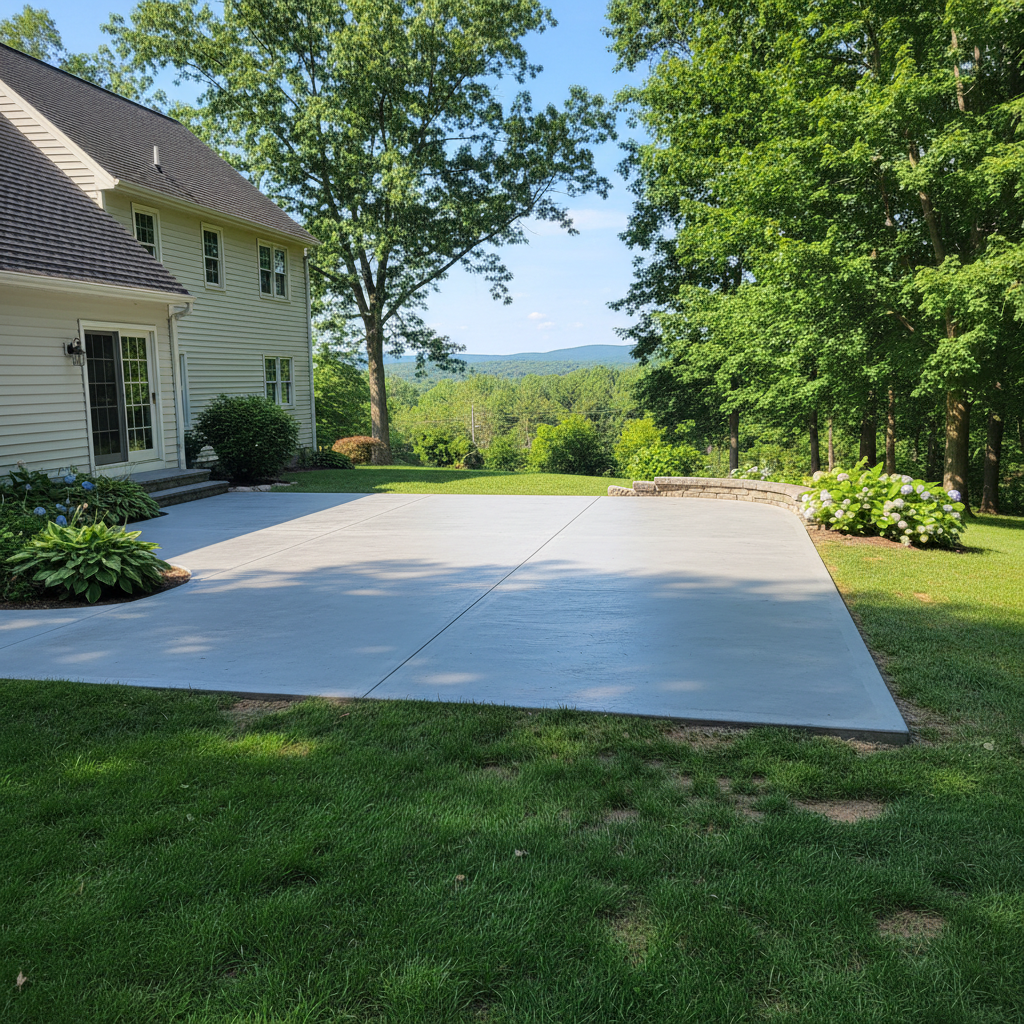
You invested good money in that concrete patio, right? You want it to look good and last for years, not crack and crumble after a few winters. I've seen too many patios around Hartford that just weren't cared for properly, and it's a shame. It doesn't take much, but a little regular attention goes a long way, especially with the crazy freeze-thaw cycles we get here in Connecticut.
Extending Your Patio's Life: The Long Game
The biggest thing you can do to extend the life of your concrete patio, hands down, is proper sealing. When we pour a patio at Hartford Concrete Paving, we always recommend sealing it. Think of it like sunscreen for your concrete, but also a raincoat. A good quality penetrating sealer gets into the pores of the concrete, making it less susceptible to water absorption. Why is that important? Because water is concrete's worst enemy, especially when it freezes.
When water gets into those tiny pores and then freezes, it expands. That expansion puts pressure on the concrete, and over time, it leads to spalling, flaking, and cracking. Our winters here, with temperatures dipping below freezing at night and warming up during the day, are brutal for unsealed concrete. You should plan on resealing your patio every 2-3 years, maybe even annually if it gets a lot of sun exposure or heavy traffic. It's not a hard job, you can do it yourself with a sprayer or roller, but make sure the concrete is clean and dry first.
Another big one is drainage. Make sure water isn't pooling on your patio. If you've got low spots where water just sits after a rain, that's a problem waiting to happen. It'll accelerate wear and tear, and in winter, that standing water will freeze and expand, putting extra stress on that specific area.
Regular Maintenance: The Basics
Keeping your patio clean is pretty straightforward. You don't need fancy equipment, just some common sense.
- Sweep it regularly: Get rid of leaves, dirt, and debris. This prevents organic matter from breaking down and staining the surface.
- Wash it down: A good rinse with a garden hose and a stiff brush (not wire!) can work wonders. For tougher grime, you can use a mild detergent. Just make sure it's concrete-safe and rinse thoroughly.
- Deal with spills immediately: Oil, grease, rust, even spilled drinks can stain concrete if left too long. Blot them up, don't rub, and then clean the area.
- Avoid de-icing salts: This is a huge one for us in New England. Most de-icing salts, especially those containing ammonium nitrates or sulfates, are incredibly corrosive to concrete. They can cause surface scaling and spalling. If you absolutely need to de-ice, use sand for traction or a concrete-safe de-icer. Even better, just shovel promptly.
- Trim back foliage: Keep shrubs and trees from growing over or too close to your patio. Roots can cause uplift, and falling leaves and berries can stain.
That's really it for the day-to-day stuff. It's not rocket science, just consistent effort.
Warning Signs: What to Look For
Your patio will tell you when something's wrong, if you know what to look for. Don't ignore these signals:
- Hairline cracks: A few tiny, thin cracks are often normal, especially as concrete cures and settles. But if they start to widen, lengthen, or become numerous, that's a red flag.
- Spalling or flaking: This is when the surface of the concrete starts to peel or chip off. It often looks like the top layer is coming loose. This is a classic sign of water damage and freeze-thaw cycles.
- Pitting: Small holes or depressions appearing on the surface. Again, often related to water, de-icing salts, or aggregates that weren't quite right.
- Uneven settling: If one section of your patio seems to be sinking or lifting compared to another, you might have a sub-base issue. This is more serious and usually requires professional attention.
- Persistent staining: If you're cleaning regularly and still getting deep, dark stains that won't come out, it might indicate a deeper issue with the concrete's porosity or something leaching from below.
Catching these early can save you a lot of headache and money down the road.
When to Call a Professional
Look, I'm all for DIY, but some things are best left to the pros. You should definitely call someone like us at Hartford Concrete Paving if you see:
- Significant cracking: Cracks that are wider than a credit card, or cracks that run all the way through the slab, especially if they're expanding quickly. These often indicate structural issues.
- Major settling or heaving: If your patio is noticeably uneven, creating tripping hazards or causing water to pool severely. This could be a problem with the ground underneath, which needs expert assessment.
- Extensive spalling or pitting: If a large area of your patio surface is deteriorating, patching might not be enough. You might need resurfacing or even replacement.
- Drainage problems: If water is consistently pooling against your house foundation or not draining off the patio, a professional can assess the grading and recommend solutions.
- You're just not sure: If you see something that worries you and you can't figure out what's going on, it's always better to get a professional opinion. We're happy to come out, take a look, and give you an honest assessment. Sometimes it's a simple fix, sometimes it's more involved, but you'll know where you stand.
Taking care of your concrete patio isn't a huge chore, but it's an important one. A little bit of effort now means you'll enjoy that outdoor space for many years to come.