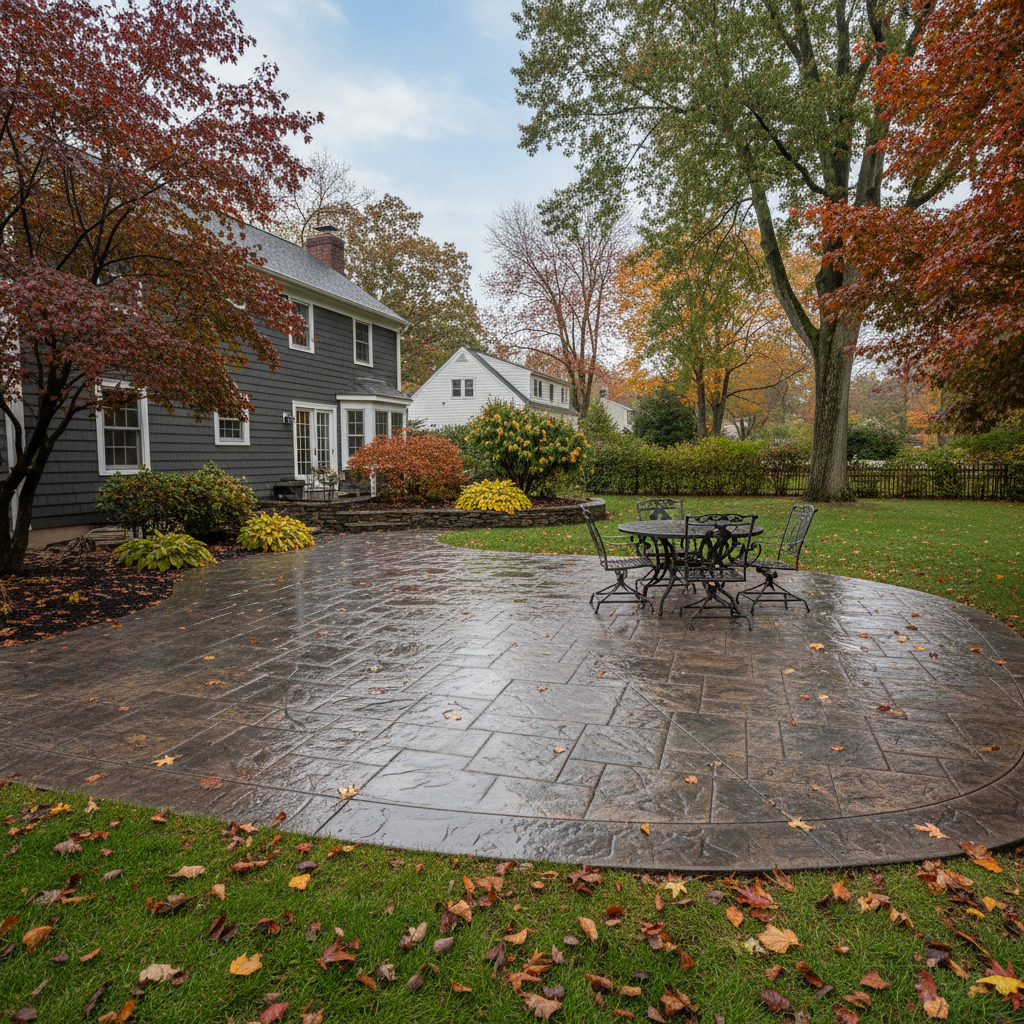
Timing Your Hartford Stamped Concrete Project
You're probably wondering, when's the best time to get stamped concrete done around here? It's a fair question, and honestly, it's one of the most important things to get right. For us in Hartford, the sweet spot for pouring and stamping concrete is usually spring through early fall. Think May through September, maybe even early October if we get a mild stretch.
Why that window? It's all about temperature. Concrete needs consistent, moderate temperatures to cure properly. If it's too hot, it dries too fast, which can lead to cracking and a weaker surface. Too cold, and it cures too slowly, or worse, freezes before it gains enough strength. You don't want that. We're looking for daytime temps consistently above 50°F and nighttime temps that don't dip below freezing. That gives the concrete the best chance to develop its full strength and for the stamping process to go smoothly.
Scheduling early in the season, say late spring or early summer, is often ideal. The ground has thawed completely, and we usually have a good run of stable weather. Plus, you get to enjoy your new patio or walkway all summer long. If you wait until late fall, you're playing a bit of a gamble with the weather. We've all seen how quickly a beautiful October can turn into a frosty November here in Connecticut.
Weather Woes: What Affects the Job
Beyond just temperature, there are a few other weather conditions that can really throw a wrench into a stamped concrete project. Rain, for starters, is a big one. You can't pour concrete in the rain. It dilutes the mix, washes away the surface, and just makes a mess. We always keep a close eye on the forecast, and if there's a good chance of rain, we'll reschedule. It's better to wait a day or two than to compromise the quality of your new concrete.
Wind can also be an issue, especially on hot days. A strong, dry wind can accelerate the drying process too much, causing surface cracking before the concrete has a chance to set. We've got ways to mitigate this, like using evaporation retarders, but ideal conditions are always calm or light breezes.
Humidity plays a role too. High humidity slows down drying, which isn't always bad, but it needs to be managed. Low humidity, especially with wind, speeds things up. It's a balancing act, and an experienced crew knows how to read the conditions and adjust. That's why choosing a local company like Hartford Concrete Paving, who understands our specific climate, is so important. We know how our weather behaves.
Protecting Your Stamped Concrete Investment Year-Round
Once your beautiful stamped concrete is in, you'll want to keep it looking great for years. Our Hartford winters, with their freeze-thaw cycles, road salt, and plows, can be tough on concrete if you don't take a few precautions.
- Sealing is Key: This is probably the most important thing you can do. Stamped concrete needs to be sealed. The sealer protects it from moisture penetration, UV rays, and abrasion. I recommend resealing every 2-3 years, depending on traffic and exposure. It's like putting sunscreen on your skin – it prevents damage.
- Avoid De-icing Salts: This is a big one. Most commercial de-icing salts, especially those containing ammonium nitrate or ammonium sulfate, will absolutely damage your concrete. They cause spalling and deterioration. Stick to sand for traction, or if you must use a de-icer, look for products specifically labeled as