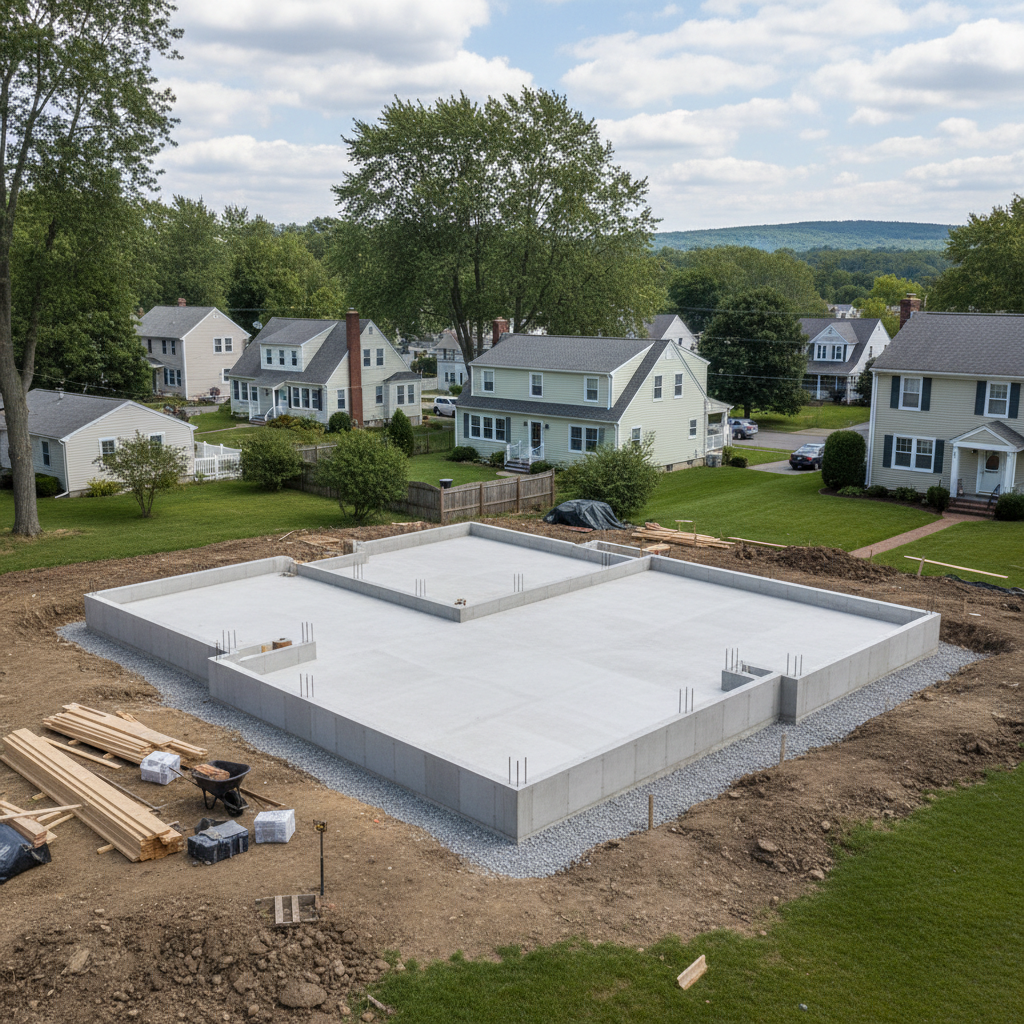
A solid foundation isn't just a saying; it's literally what holds your whole building up. And when we're talking about concrete foundations here in Hartford, there's a lot more to it than just mixing cement and pouring it in a hole. I've seen my share of foundation work, from new builds in West Hartford to shoring up old Victorians in the Asylum Hill neighborhood, and every job's got its own quirks.
Why Foundations Aren't One-Size-Fits-All Here
You might think concrete is concrete, right? Not exactly. Especially when you're laying a foundation in Connecticut. We deal with some serious freeze-thaw cycles. That means the ground expands when it freezes and contracts when it thaws. If your foundation isn't designed and poured right, that movement can cause real problems down the line – cracks, shifting, even structural damage. It's why we always dig down below the frost line, which around here is typically 42 inches. But I often go a little deeper just to be safe, especially if the soil conditions are tricky.
Then there's the soil itself. We've got a real mix in Hartford. You'll find everything from sandy loam to heavy clay, sometimes even within a few blocks. I remember a job near Elizabeth Park where one side of the property was pretty sandy, but the other side was dense, almost blue clay. Each type of soil reacts differently to moisture and weight. If you don't account for that, you're setting yourself up for settlement issues. That's where local experience really pays off. Someone who's only worked in, say, Florida, wouldn't have a clue about the challenges our New England soil presents.
Common Foundation Projects I See
Most of the foundation work we do falls into a few categories:
- New Construction: This is pretty straightforward, but you still need to get it right from the start. We're talking about pouring footings, walls, and slabs for new homes, additions, or commercial buildings. Getting the grade, drainage, and rebar placement perfect is crucial.
- Additions: Adding a new room or expanding your kitchen often means extending your existing foundation or building a new section. The trick here is tying the new foundation into the old one seamlessly, making sure there's no differential settlement between the two. You don't want a step in your floor down the road, do you?
- Foundation Repair: This is where things get interesting. Sometimes it's just a few hairline cracks that need sealing. Other times, you're looking at serious issues like bowing walls, sinking corners, or water intrusion. We've done everything from installing helical piers to underpinning sections of foundations. It's not a DIY job, trust me. You need to understand the underlying cause of the problem, not just patch over the symptoms.
- Basement Conversions/Lowering: People often want to convert a damp, unusable basement into living space. This might involve lowering the basement floor, which means digging out and pouring a new, deeper slab, and sometimes even underpinning the existing foundation walls. It's a big project, but it can add a ton of value and usable space to your home, especially in older Hartford homes where basements can be pretty shallow.
Why Local Expertise Isn't Just a Buzzword
I've been doing this long enough to know that you can't just apply a generic solution to a Hartford foundation problem. When you're dealing with a contractor from out of state or someone who just started up, they might not understand the specific challenges we face here.
For example, our older homes, especially those built before the 1950s, often have rubble stone foundations or foundations that weren't poured with modern concrete mixes or rebar reinforcement. Fixing those requires a different approach than a newer, poured concrete foundation. You need to respect the original construction while bringing it up to modern standards where necessary.
Then there's the local building code. It's not just a suggestion; it's there for a reason. Knowing the ins and outs of Hartford's codes, what permits you need, and how to pass inspections smoothly saves you headaches and money. We've built relationships with the local inspectors, so we know what they're looking for, and we make sure our work meets or exceeds those expectations.
At Hartford Concrete Paving, we're not just pouring concrete; we're building the base for your home or business. We take pride in understanding the unique conditions of our city, from the soil under your feet to the specific architectural styles of our neighborhoods. When you're talking about foundations, you want someone who knows the ground you're standing on, literally.