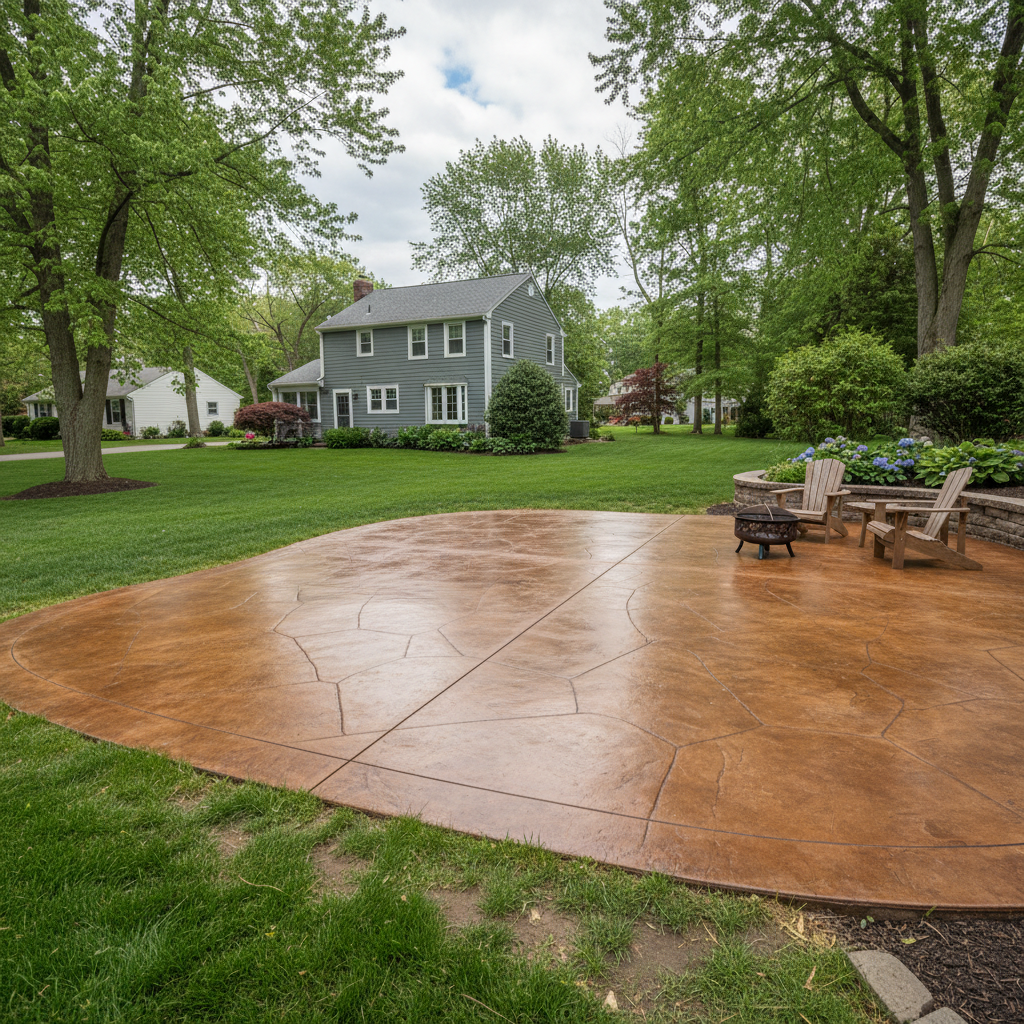
So, you're thinking about staining your concrete. It's a great way to add character and a custom look to a patio, walkway, or even an interior floor. Done right, it looks fantastic and can really boost your home's curb appeal. But I've seen a lot of folks around Hartford make some pretty common mistakes when they dive into a staining project, and those mistakes can be expensive to fix or, worse, impossible to undo. Let's talk about what to watch out for.
Mistake #1: Not Understanding Your Existing Concrete
This is probably the biggest one. You can't just slap stain on any old concrete and expect magic. The condition of your existing slab is everything. Is it new? Is it old? Has it been sealed before? Has it ever had an acid wash or a power washing that left it too smooth? All these things matter.
For instance, if your concrete is really old and pitted, or if it's got a lot of previous sealers embedded in it, you might not get the uniform, vibrant color you're hoping for. Stains, especially acid stains, react with the minerals in the concrete. If those minerals are gone or covered up, the reaction won't happen. I've seen people in neighborhoods like the West End, with a lot of older homes and driveways, get really disappointed because their 50-year-old concrete just didn't take the stain evenly. You need to know what you're working with, or have a pro assess it, before you even pick a color.
Mistake #2: Skipping the Prep Work (or Doing it Wrong)
Oh, this one's a classic. Staining isn't like painting a wall where you just wipe it down. Concrete needs serious cleaning and etching. Any dirt, grease, oil, paint, or old sealer will block the stain from penetrating. And I mean any dirt. Even a small leaf imprint left for too long can create a ghosting effect after staining.
You've got to clean it thoroughly, usually with a degreaser and a good power wash. Then, for many stains, you need to etch it with an acid solution to open up the pores. If you don't etch properly, the stain won't absorb deeply, and it'll look blotchy or wear off quickly. I've seen DIYers think a quick hose-down is enough. It's not. This step is non-negotiable for a good, lasting result. If Hartford Concrete Paving is doing a job, we spend a lot of time on prep because we know it's the foundation of the whole project.
Mistake #3: Choosing the Wrong Type of Stain
There are different types of concrete stains, and they behave differently. You've got acid-based stains, which react chemically with the concrete's minerals to create translucent, variegated colors. Then there are water-based stains, which are more like paints, offering more uniform color but sitting on the surface. There are also dyes, which penetrate but don't react chemically.
A lot of homeowners just pick a color they like without understanding how that particular type of stain will look on their specific concrete. Acid stains give you a mottled, natural stone look – you can't pick an exact shade of blue. Water-based stains give you more control over color, but they can look less natural if not applied expertly. If you want a perfectly uniform color, an acid stain isn't for you. If you want that rich, earthy, translucent look, a water-based stain won't cut it. Know the difference and match it to your vision.
Mistake #4: Not Doing a Test Patch
This is such a simple step, and it saves so much heartache. Always, always, always do a test patch in an inconspicuous area. Seriously. A small corner, under a bush, behind a shed – somewhere nobody will see it. Concrete is like a fingerprint; no two slabs are exactly alike, even if they look similar. The porosity, the mineral content, the age – all these factors affect how the stain will look.
What looks great in a picture online or on a sample chip might look completely different on your concrete. A test patch lets you see the actual color and penetration on your specific slab. It also lets you practice your application technique. You might find out your concrete absorbs stain much faster than you thought, or that the color is way darker than you wanted. Better to find that out on a small, hidden spot than on your entire patio.
Mistake #5: Hiring on Price Alone (Red Flags to Watch For)
I get it, everyone wants a good deal. But when it comes to concrete staining, going with the cheapest bid can often cost you more in the long run. Staining is an art and a science; it requires skill, experience, and the right tools. A really low bid often means corners are being cut.
- No Prep Talk: If a contractor doesn't talk extensively about cleaning and etching, that's a huge red flag.
- No Test Patch: If they don't suggest or offer a test patch, walk away. They're not confident in their work or don't understand the nuances.
- No Sealing Included: Stained concrete must be sealed to protect the color and the concrete itself. If sealing isn't part of the quote, that's a problem.
- Vague Contracts: A good contractor will detail the process, materials, and timeline. If it's just a number on a napkin, be wary.
You're investing in your home. Don't let a few hundred dollars difference now lead to thousands in re-dos or a result you hate for years. Ask for references, look at their past work, and make sure they understand the unique challenges of concrete in our New England climate – like how freeze-thaw cycles can affect sealers if not applied correctly.
Staining concrete is a fantastic way to upgrade your space, but it's not a project to rush into. Do your homework, understand your concrete, and don't be afraid to ask a lot of questions. That's how you get a result you'll love for years to come.